
The short answer
HVAC maintenance is a hands-on inspection and cleaning of your indoor and outdoor equipment that finds wear, clogs, and electrical problems before they cause a breakdown. In Miami, air conditioning runs most of the year, so regular tune-ups matter, especially before hurricane season starts on June 1.
In Miami and the surrounding area, your air conditioner gets very little time off. The wet season runs from May through October, bringing frequent afternoon thunderstorms and heavy humidity. Even the sunnier, drier months from November through April are warm enough that most homes keep the AC running. That near-constant use wears down parts, clogs drain lines, and coats coils with dust and debris. Regular HVAC maintenance from RapidFix HVAC Repair Service catches these problems early, helps your system run efficiently, and gives you a clear picture of its condition before a small issue becomes a breakdown on a hot afternoon.
Signs Your System Needs Maintenance
Many homeowners schedule maintenance on a regular routine, but some symptoms mean it shouldn't wait. If you notice any of the following, it's a good time to have a technician look at your system:
Humidity is an especially useful clue in South Florida. An air conditioner that cools the air but doesn't pull moisture out of it often has a dirty coil, restricted airflow, or a refrigerant problem. Maintenance can uncover all of these.
- Rooms feel warm or sticky even with the thermostat set low
- Weak airflow from vents, or some rooms cooling much better than others
- The system runs almost nonstop, or turns on and off in short bursts
- Water pooling near the indoor unit, or a drain line that backs up
- Musty smells when the system starts, which can point to moisture in the drain pan or ductwork
- New rattling, buzzing, squealing, or clicking sounds
- Ice on the refrigerant lines or coils
- Electric bills rising without any change in how you use your home
What We Check During a Maintenance Visit
A maintenance visit covers both the indoor air handler and the outdoor condenser. Our technicians follow a consistent checklist so nothing gets skipped, and they write down anything that needs attention.
Clogged condensate drains are a frequent problem in humid climates. When they overflow, water can damage ceilings, floors, and walls. That's why clearing and testing the drain is part of every visit.
- Air filter condition, with replacement or advice on the right size and type
- Cleanliness of the evaporator coil and condenser coil
- Condensate drain line, drain pan, and safety float switch, cleared and tested
- Refrigerant pressures and the temperature difference across the coil
- Electrical connections, capacitors, and contactors for wear or loose wiring
- Blower motor and outdoor fan motor operation
- Thermostat settings and accuracy
- Visible ductwork and connections for gaps or leaks
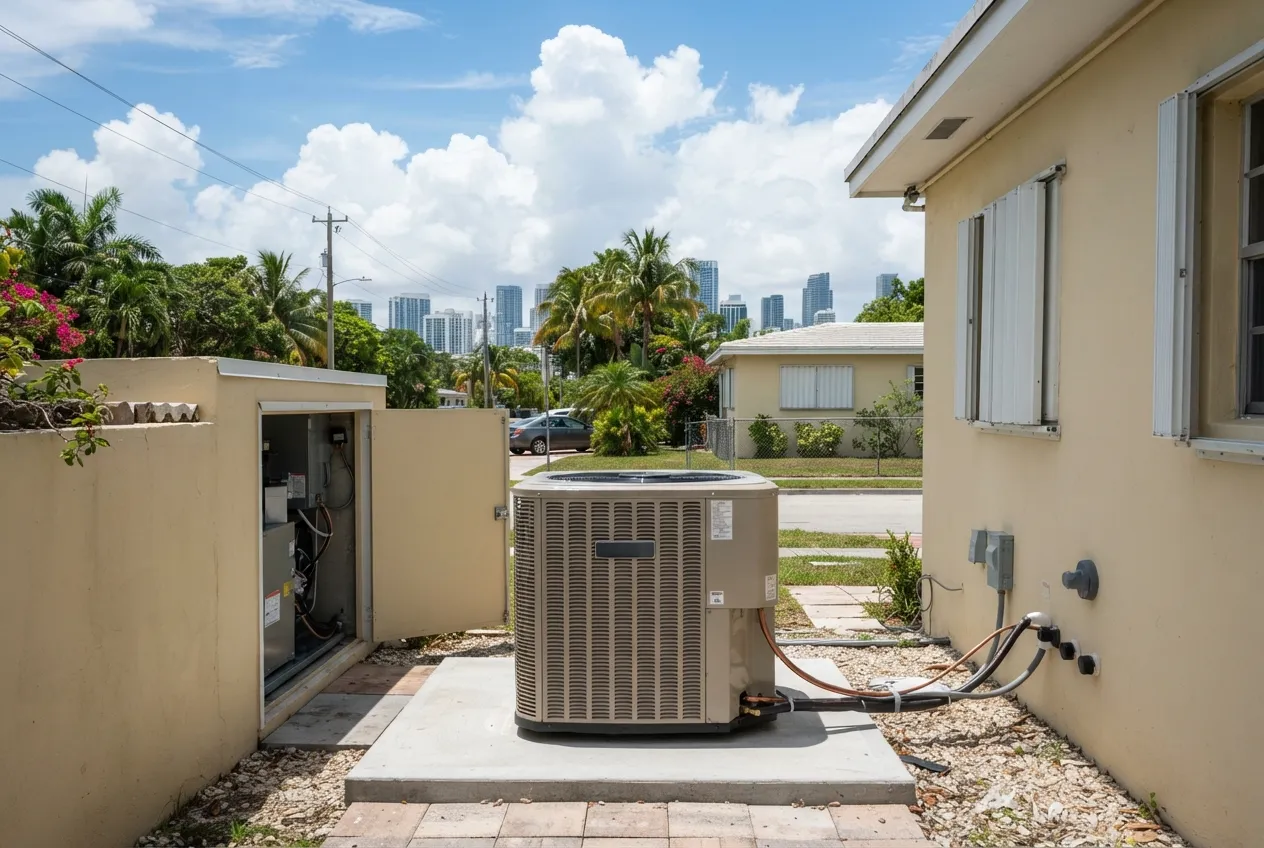
- Outdoor unit clearance, leveling, and debris from storms or landscaping
Maintenance and Hurricane Season
The Atlantic hurricane season runs from June 1 to November 30, which overlaps with the hottest, most humid part of the year. A tune-up in the spring means your system is in good shape before storms bring power outages and long stretches of heavy use.
After a storm, check the outdoor unit for branches, debris, or standing water before turning the system back on. If the unit was flooded or looks damaged, leave it off and have a technician inspect it first. Running a water-damaged unit can make the damage worse.
Repair or Replace: How to Decide
Sometimes a maintenance visit turns up a problem that needs more than a cleaning. When that happens, our technician will explain what they found and walk you through your options. A worn capacitor, a failing fan motor, or a clogged drain is usually a straightforward repair. Repeated refrigerant leaks, a failing compressor, or a system that can no longer keep your home comfortable may make replacement the more practical choice.
Things worth weighing include the age and overall condition of the equipment, how often it has needed repairs, how well it controls humidity, and whether it uses an older refrigerant that is becoming harder to service. We'll give you the information, and the decision is yours.
If you do replace, Florida Power & Light offers rebates on qualifying high-efficiency central air conditioners and heat pumps through its Residential HVAC program. These rebates are delivered through participating contractors at the time of installation, and we confirm the current terms before quoting them. Note that the federal Energy Efficient Home Improvement Credit for heat pumps applied only to systems placed in service before December 31, 2025, so it isn't available for new installations now.
What Affects the Cost of Maintenance
Every home is different, so the cost of a maintenance visit depends on your specific system and its condition. The main factors include:
We explain what's included before any work begins, and we won't make repairs without your approval.
- The type of system and how many units your home has
- Where the equipment is located, such as an attic, closet, or rooftop
- How dirty the coils and drain are, since heavy buildup takes longer to clean
- Whether parts such as filters, capacitors, or drain components need replacing
- Whether the visit turns up repairs beyond routine maintenance
How a Maintenance Visit Works
We aim to make the visit simple and easy to follow from start to finish:
Most visits are finished in a single trip unless parts need to be ordered.
- You schedule a time that works for you, and we confirm the appointment
- The technician asks about any problems you've noticed, then inspects the indoor and outdoor equipment
- Coils, drains, and filters are cleaned or serviced, and electrical and refrigerant readings are taken
- You get a plain-language explanation of what we found, including anything that needs repair
- If repairs are needed, you'll see your options before any work is done