
The short answer
Duct cleaning is worth it when you have a specific reason, such as visible debris, musty odors, mold, pests, or recent renovation dust. It isn't something every home needs on a fixed schedule. In Miami's humid climate, we also check for the moisture and duct damage behind the problem, because cleaning won't fix leaks, wet insulation, or crushed ducts.
In Miami, your air conditioner runs most of the year, and every hour it runs, air moves through your ductwork. Over time, ducts collect dust, pet hair, and construction debris. In our humid climate, they can also collect moisture, which can lead to mold growth. RapidFix HVAC Repair Service cleans and inspects residential duct systems for homeowners in Miami and nearby cities. We look at the whole system, not just the dust inside the ducts. That includes leaks, damaged insulation, and moisture problems that cleaning alone won't fix. This page explains when duct cleaning makes sense, what we check, when repair or replacement is the better choice, and what to expect from a visit.
Signs Your Ducts Need Cleaning
Duct cleaning isn't something every home needs on a fixed schedule. It's worth doing when there's a specific reason. In South Florida, the most common reasons are moisture, recent work on the house, and heavy dust or allergens. Here are the signs we look for:
A musty smell deserves attention. From May through October, Miami's wet season brings high humidity and frequent afternoon thunderstorms. If ducts sweat or water gets in, mold can grow inside the system. Cleaning removes the growth, but we also look for why moisture is getting in so it doesn't come back.
- Visible dust or debris blowing out of supply vents when the system starts
- Gray or black buildup around vent covers that returns soon after you wipe it
- A musty or mildew smell when the AC kicks on, especially during the wet season
- Visible mold growth inside ducts, on vent grilles, or near the air handler
- Recent renovation, drywall work, or floor sanding that sent dust through the system
- Signs of rodents or insects in the ductwork, such as droppings or nesting material
- Allergy or asthma symptoms in the household that seem worse when the system runs
- You've moved into a home and don't know when the ducts were last cleaned
What We Check During a Duct Inspection
A good duct cleaning starts with an inspection. Before we recommend anything, we want to know what's actually in your ducts and what condition they're in. We check:
We'll show you photos or camera footage of what we find. If the ducts are clean and in good condition, we'll tell you that too.
- Supply and return vents, grilles, and registers
- Main trunk lines and branch ducts, using a camera where we can't see directly
- The return air path and filter fit, since a poorly sealed filter lets dust get around it
- The air handler, blower wheel, and evaporator coil, which often hold more dirt than the ducts
- The condensate drain pan and line, a common source of moisture and odors
- Duct insulation, looking for gaps, torn wrap, or wet spots
- Connections and seams for leaks, especially in attic runs
- Flexible duct for kinks, crushing, or sagging that restricts airflow
Clean, Repair, or Replace?
Cleaning is the right answer when the ducts are dirty but in good condition. If the problem is damage, cleaning won't solve it. Sometimes cleaning can make things worse by disturbing fragile material.
Repair makes sense when problems are limited to specific sections. Examples include a disconnected joint, a torn section of flex duct, a leaky seam, or a patch of wet or missing insulation. We can seal leaks with mastic or approved tape, replace short runs, reattach loose connections, and re-insulate where needed.
Replacement is worth considering when the ductwork has widespread damage, has mold growing inside the duct board or flex duct lining, is crushed in many places, or is the wrong size for your system. Some older homes also have duct layouts that were never designed well. In those homes, some rooms stay hot and others stay cold no matter how clean the ducts are.
If your air conditioner or heat pump is also near the end of its life, it can make sense to plan both projects together. Florida Power & Light offers rebates on qualifying high-efficiency central air conditioners and heat pumps. These rebates go through participating contractors at the time of installation, and we confirm the current program terms before including them in any quote. The federal Energy Efficient Home Improvement Credit for heat pumps covered only systems placed in service before December 31, 2025, so it isn't available for new installations now.
What Affects the Cost
Every home is different, so we quote after we've seen the system. The main factors are:
Before work starts, we explain each item in writing so you can decide what to do now and what can wait.
- The size of the home and the number of supply and return vents
- How many air handlers and separate duct systems you have
- Where the ducts run (attic, crawl space, or dropped ceilings) and how easy they are to reach
- Duct material, since sheet metal, duct board, and flex duct each need different cleaning methods
- How much debris, mold, or contamination is present
- Whether the coil, blower, and drain pan also need cleaning
- Any repairs, sealing, insulation, or replacement sections needed
How a Visit Works
Here's what to expect when a RapidFix technician comes out:
Timing matters in Miami. Hurricane season runs from June 1 to November 30, and storms can cause roof leaks and power outages that affect attic ductwork. If your home has had water get in, we recommend an inspection. The drier months from November through April are also a more comfortable time to schedule work in hot attics.
- We ask what you've noticed, such as smells, dust, comfort problems, or recent work on the house
- We inspect the vents, ducts, air handler, and drain system, and show you what we find
- We explain your options (cleaning, repair, replacement, or nothing at all) with a written quote
- If you approve, we protect floors and furniture near the work areas
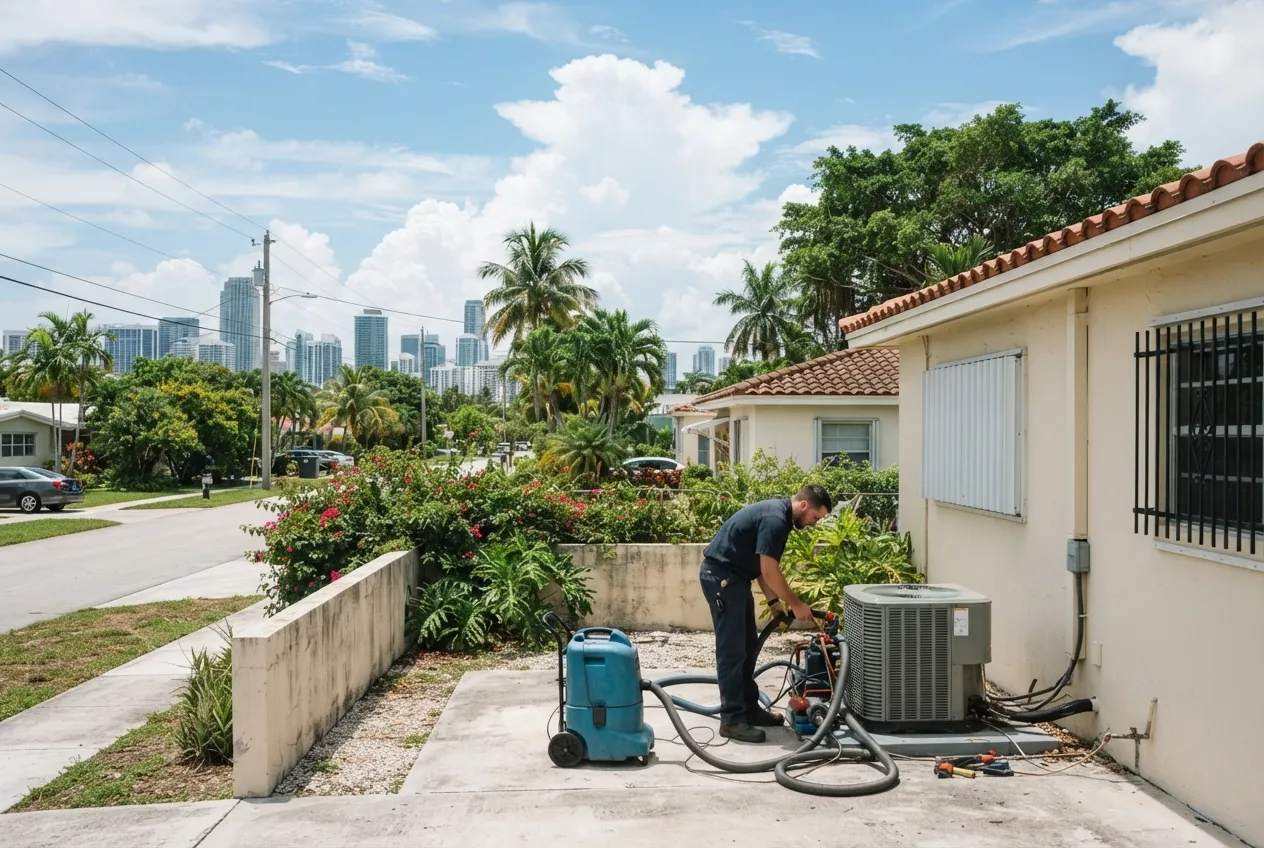
- We use negative-pressure equipment so loosened debris is pulled out of the system instead of spreading into your home
- We clean the registers, ducts, and system components as agreed, then reinstall the vent covers
- We check airflow and system operation, replace the filter or recommend the right one, and walk you through the results