
The short answer
You likely need a new AC when your system struggles to cool or control humidity, needs repeated major repairs, or keeps leaking refrigerant. We inspect your home, ducts, and electrical before recommending a system, explain repair and replacement options, and give you a written quote based on your home's specific needs.
A new air conditioner is a big decision in South Florida, where cooling runs for most of the year. RapidFix HVAC Repair Service installs central air conditioners, heat pumps, and ductless systems for homeowners in Miami and nearby cities. This page explains how to tell when a new system makes more sense than another repair, what we look at before recommending equipment, which factors shape the cost, and what to expect from the first visit through startup. Our goal is to help you choose a system that fits your home, your humidity, and your budget. Then we install it carefully so it runs quietly and keeps up on the hottest, stickiest days.
Signs It May Be Time for a New Air Conditioner
In Miami, the air conditioner rarely gets a long break. The wet season from May through October brings heavy humidity and afternoon thunderstorms, and even the sunnier months from November through April are warm enough that most homes keep cooling on. That steady workload wears equipment down. These signs suggest a replacement is worth discussing:
One of these signs on its own doesn't always mean you need a new unit. Several of them together on an aging system usually do.
- The system runs almost constantly, but some rooms never feel cool.
- The house feels clammy or sticky even when the thermostat shows the temperature you set.
- You have needed several repairs over the last couple of seasons, especially on major parts like the compressor or coil.
- The outdoor unit shows heavy corrosion, or the coil is leaking refrigerant again after an earlier fix.
- Your electric bills keep climbing even though your habits haven't changed.
- The system uses an older refrigerant that has become costly and hard to find for recharges.
- You are renovating, adding a room, or converting a garage, and the current system can't cover the new space.
What We Check Before Recommending a System
A new system should be sized and selected for your specific house, not chosen by copying the label on the old unit. Before we recommend anything, a technician looks at the whole setup:
We also ask how you use your home. A household that works from home has different needs than a seasonal resident who keeps the house closed up for months. In both cases, humidity control matters as much as temperature.
- Home size, layout, ceiling heights, insulation, and window exposure, which all affect how much cooling each room needs.
- Ductwork condition, including leaks, crushed runs, poor insulation, and returns too small to move enough air.
- The air handler location and condensate drain setup, since clogged or poorly sloped drains are a common cause of water damage.
- Electrical service, including the disconnect, breaker, and wiring that feed the equipment.
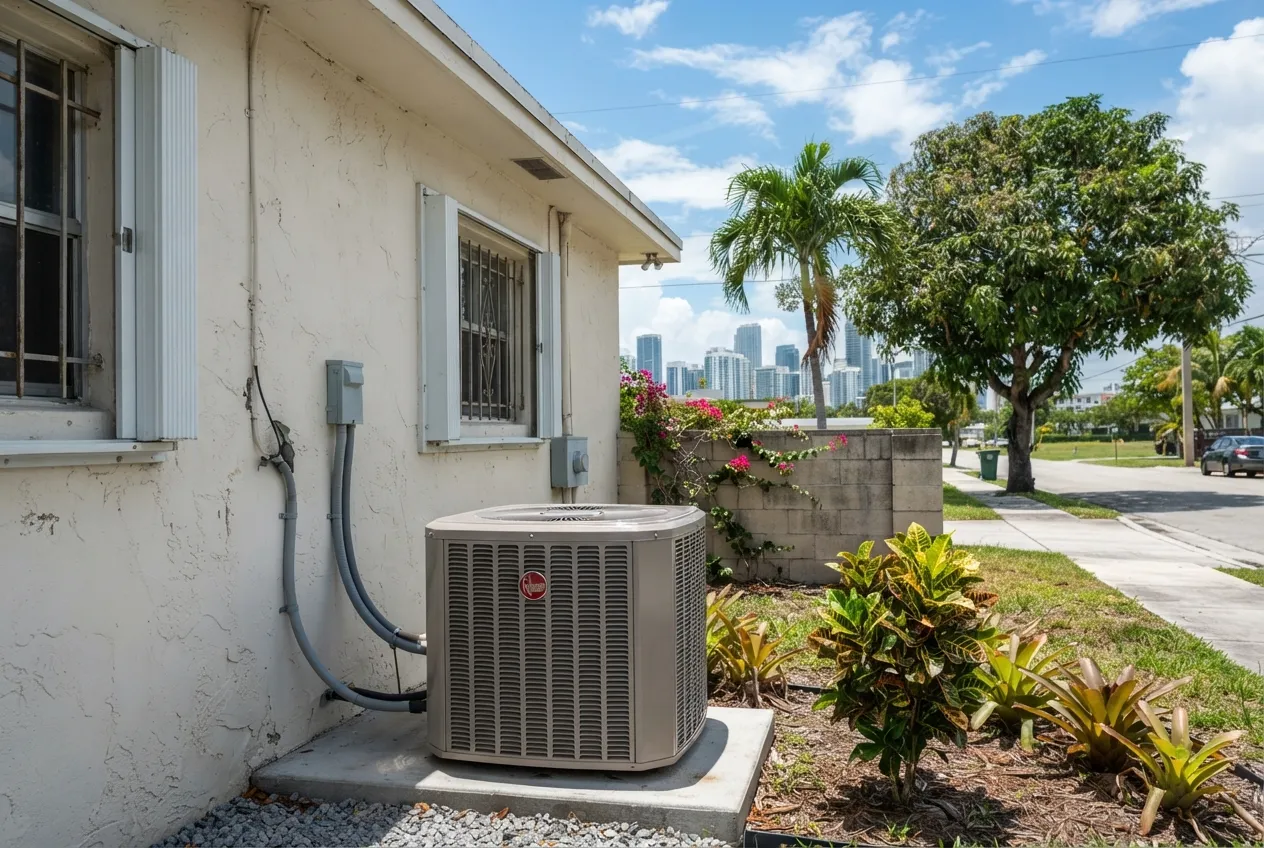
- The outdoor pad or stand, clearance around the condenser, and how the unit is secured against high winds.
- Thermostat type and placement, and whether a zoned or variable-speed system would fix comfort problems in specific rooms.
Repair or Replace: Your Options
Not every struggling system needs to be replaced. If the unit is relatively young, the problem is a single failed part like a capacitor, fan motor, or contactor, and the coil and compressor are in good shape, a repair is often the sensible choice. We will tell you when that's the case.
Replacement tends to make more sense when a major component has failed on an older system, when refrigerant leaks keep coming back, or when the existing equipment was never sized correctly for the house. In those situations, paying for a repair often just delays a bigger decision, and you keep paying to run an inefficient system in the meantime.
There are also middle-ground options. Sometimes we can replace only the outdoor condenser or only the air handler, though pairing new and old components has limits and can affect efficiency and performance. Other times the equipment is fine and the ducts are the real problem. We'll walk you through each option and its tradeoffs so you can decide with the full picture.
What Affects the Cost of AC Installation
Every installation is quoted after we see the home, because the price depends on several factors:
Florida Power & Light runs a Residential HVAC program that offers rebates on qualifying high-efficiency central air conditioners and heat pumps. These rebates are handled through participating contractors at the time of installation, and the terms can change, so we confirm the current details before including anything in a quote. Homeowners also ask about the federal energy-efficiency tax credit for heat pumps. That credit only covered qualifying systems placed in service before December 31, 2025, so it isn't available for new installations now.
- System type: a central air conditioner with an air handler, a heat pump, or a ductless mini-split.
- Capacity and efficiency rating, since higher-efficiency and variable-speed equipment costs more up front but can lower monthly bills.
- Ductwork that needs sealing, repair, resizing, or full replacement.
- Electrical upgrades, a new disconnect, or new refrigerant lines.
- Access, such as an air handler in a tight closet or attic, or a condenser on a roof.
- Permits, inspections, and how the outdoor unit needs to be mounted and secured.
- Add-ons like a smart thermostat, upgraded air filtration, or dehumidification features.
How an Installation Visit Works
Here's what to expect from your first call to the finished job:
The Atlantic hurricane season runs from June 1 to November 30, and summer is also when installation demand is highest. If your system is showing its age, planning a replacement during the cooler, drier months often makes scheduling easier and helps you avoid a breakdown in the middle of a heat wave.
- Assessment: a technician inspects your current system, ducts, and electrical, and takes the measurements needed to size new equipment.
- Options: we explain the choices that fit your home, including what each one does well and where it falls short, and give you a written quote.
- Scheduling: once you approve, we set an installation date and handle the required permits.
- Installation: the crew protects floors and work areas, removes the old equipment, sets the new units, connects refrigerant lines, electrical, and drains, and secures the outdoor unit.
- Startup and testing: we check refrigerant charge, airflow, temperature difference across the coil, and drain function, then confirm the thermostat is set up correctly.
- Walkthrough: we show you how to change the filter, what the controls do, and what routine maintenance keeps the system running well.
AC Installation by city
- AC Installation in Miami BeachLocal service & repairs
- AC Installation in North Bay VillageLocal service & repairs
- AC Installation in West MiamiLocal service & repairs
- AC Installation in Miami SpringsLocal service & repairs
- AC Installation in SurfsideLocal service & repairs
- AC Installation in Bay Harbor IslandsLocal service & repairs
- AC Installation in Coral GablesLocal service & repairs
- AC Installation in North MiamiLocal service & repairs
- AC Installation in South MiamiLocal service & repairs
- AC Installation in Opa-lockaLocal service & repairs
- AC Installation in HialeahLocal service & repairs
- AC Installation in North Miami BeachLocal service & repairs