
The short answer
A heat pump is a strong fit for Bay Harbor Islands homes because it handles near-constant cooling and occasional mild heating in one system. Proper sizing, corrosion-aware placement, and secure mounting matter most here. We also confirm current Florida Power & Light rebate terms before quoting, since the federal 25C credit no longer applies to new installations.
A heat pump is one system that cools your home through the long South Florida warm season and provides gentle heat on the few cool mornings each winter. For homeowners in Bay Harbor Islands, about 8 miles north of our Miami base, RapidFix HVAC Repair Service installs heat pumps sized for the house, placed with the bayside environment in mind, and set up to run efficiently most of the year. This page covers what goes into a good installation here, from the first measurements to the final startup check.
Why heat pumps suit homes in Bay Harbor Islands
In this part of Miami-Dade County, air conditioning runs for most of the year. Nearby Miami Beach shares the same tropical monsoon pattern: a wet season from May through October with frequent afternoon thunderstorms, and a sunnier, less humid stretch from November through April. That means your system spends far more hours cooling and removing moisture than it does heating.
A heat pump works like a central air conditioner in summer, then reverses to move heat into the house when temperatures dip. For a climate with short, mild cool spells, that is usually a more practical setup than keeping a separate furnace or relying on electric resistance heat strips alone. Many homeowners replacing an aging AC choose a heat pump for this reason.
Sizing and placement for bayside homes
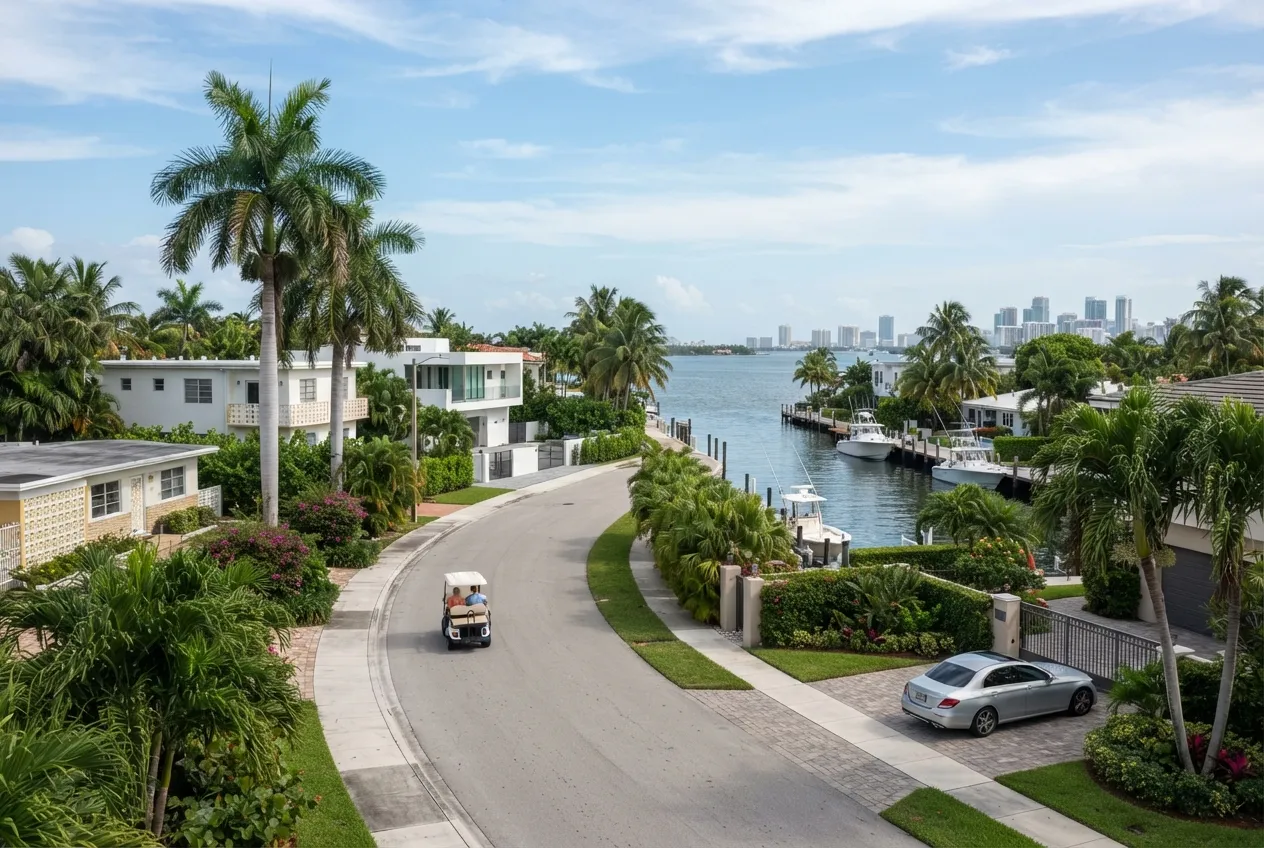
Bay Harbor Islands sits on the water in Biscayne Bay, and that shapes how we plan an install. An oversized unit cools the air quickly but shuts off before it pulls enough humidity out, leaving rooms cool but clammy. An undersized one runs constantly on hot afternoons. We calculate the load based on your home's square footage, insulation, window area, sun exposure, and layout rather than matching the old unit's size by default.
Placement of the outdoor unit matters just as much. Salt air speeds up corrosion on coils and cabinets, so we look at where the unit will sit relative to prevailing wind and spray, and we discuss coil coatings and corrosion-resistant equipment options. We also consider pad height and secure mounting so the unit is better positioned for heavy rain and storm winds.
- Room-by-room load calculation instead of guessing from the old system
- Outdoor unit placement that limits salt and debris exposure
- Raised pads or mounts where standing water is a concern
- Tie-downs and secure anchoring for storm conditions
- Duct inspection to catch leaks or undersized returns before startup
What installation day looks like
Most single-system replacements follow a predictable sequence. We protect floors and work areas, remove the old equipment, and set the new indoor and outdoor units. Refrigerant lines are installed or flushed, pressure-tested, and evacuated before the system is charged. We then confirm airflow, check the thermostat setup for both heating and cooling modes, and walk you through how to use it.
Before we leave, we explain the filter size and schedule, how to recognize the defrost cycle so it doesn't surprise you on a cool morning, and what to keep clear around the outdoor unit.
Rebates and the federal tax credit
Florida Power & Light runs a Residential HVAC program that offers rebates on qualifying high-efficiency central air conditioners and heat pumps. These rebates are delivered through participating contractors at the time of installation. Because program terms can change, we confirm the current requirements before quoting so you know what applies to your equipment choice.
Homeowners sometimes ask about the federal Energy Efficient Home Improvement Credit, known as 25C. That credit covered qualifying heat pumps placed in service before December 31, 2025, and it is not available for new installations after that date. We don't want anyone planning a budget around an incentive that no longer applies.
Timing your installation
The Atlantic hurricane season runs from June 1 to November 30, and that overlaps with the hottest, busiest months for cooling. Many homeowners find it easier to replace a system during the drier November-through-April stretch, when the house can tolerate a few hours without cooling and outdoor work is less likely to be interrupted by afternoon storms. If your current system has already failed, we'll work to get a replacement in as soon as possible regardless of season.
Serving Bay Harbor Islands and nearby communities
Along with Bay Harbor Islands, we install heat pumps for homeowners in Surfside, North Miami, North Bay Village, North Miami Beach, and Miami Beach. Wherever you are in the area, the process is the same: measure the home, recommend equipment that fits it, and install it carefully.
More services in Bay Harbor Islands
- AC Repair in Bay Harbor IslandsLocal service & repairs
- Heating Repair in Bay Harbor IslandsLocal service & repairs
- AC Installation in Bay Harbor IslandsLocal service & repairs
- Furnace Repair in Bay Harbor IslandsLocal service & repairs